border=0 >
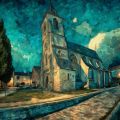
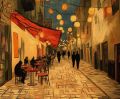
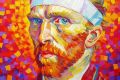
 | Van Gogh
Early Life and Background Vincent Willem van Gogh was born on March 30, 1853, in Groot-Zundert, a small village in the southern Netherlands. He was the eldest s ... »» browse the artworks | |
![Gustav Klimt (July 14, 1862 – February 6, 1918) was an Austrian Symbolist painter and one of the most prominent members of the Vienna Secession movement. His major works include paintings, murals, sketches, and other art objects. Klimt's primary subject was the female body,[1] and his works are marked by a frank eroticism—nowhere is this more apparent than in his numerous drawings in pencil (wikipedia)](https://www.canadaoncanvas.com/artworks/logos/5013.jpg "Gustav Klimt (July 14, 1862 – February 6, 1918) was an Austrian Symbolist painter and one of the most prominent members of the Vienna Secession movement. His major works include paintings, murals, sketches, and other art objects. Klimt's primary subject was the female body,[1] and his works are marked by a frank eroticism—nowhere is this more apparent than in his numerous drawings in pencil (wikipedia)") | Gustav Klimt
Gustav Klimt (July 14, 1862 – February 6, 1918) was an Austrian Symbolist painter and one of the most prominent members of the Vienna Secession movement. His ... »» browse the artworks | |
![Pierre-Auguste Renoir (French pronunciation: [ʁənwaʁ]; February 25, 1841 – December 3, 1919) was a French artist who was a leading painter in the development of the Impressionist style. As a celebrator of beauty, and especially feminine sensuality, it has been said that "Renoir is the final representative of a tradition which runs directly from Rubens to Watteau (Wikipedia)](https://www.canadaoncanvas.com/artworks/logos/5021.jpg "Pierre-Auguste Renoir (French pronunciation: [ʁənwaʁ]; February 25, 1841 – December 3, 1919) was a French artist who was a leading painter in the development of the Impressionist style. As a celebrator of beauty, and especially feminine sensuality, it has been said that \"Renoir is the final representative of a tradition which runs directly from Rubens to Watteau (Wikipedia)") | Renoir
Pierre-Auguste Renoir (French pronunciation: [ʁənwaʁ]; February 25, 1841 – December 3, 1919) was a French artist who was a leading painter in the developme ... »» browse the artworks | |
| |
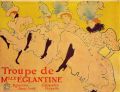
![Henri Marie Raymond de Toulouse-Lautrec-Monfa or simply Henri de Toulouse-Lautrec (French pronunciation: [ɑ̃ʁi də tuluz loˈtʁɛk]) (24 November 1864 – 9 September 1901) was a French painter, printmaker, draughtsman, and illustrator, whose immersion in the colourful and theatrical life of fin de siècle Paris yielded an œuvre of exciting, elegant and provocative images of the modern and sometimes decadent life of those times. Toulouse-Lautrec is known along with Cézanne, Van Gogh, and Gauguin as one of the greatest painters of the Post-Impressionist period. In a 2005 auction at Christie's auction house a new record was set when "La blanchisseuse", an early painting of a young laundress, sold for $22.4 million U.S (Wikipedia)](https://www.canadaoncanvas.com/artworks/logos/5026.jpg "Henri Marie Raymond de Toulouse-Lautrec-Monfa or simply Henri de Toulouse-Lautrec (French pronunciation: [ɑ̃ʁi də tuluz loˈtʁɛk]) (24 November 1864 – 9 September 1901) was a French painter, printmaker, draughtsman, and illustrator, whose immersion in the colourful and theatrical life of fin de siècle Paris yielded an œuvre of exciting, elegant and provocative images of the modern and sometimes decadent life of those times. Toulouse-Lautrec is known along with Cézanne, Van Gogh, and Gauguin as one of the greatest painters of the Post-Impressionist period. In a 2005 auction at Christie's auction house a new record was set when \"La blanchisseuse\", an early painting of a young laundress, sold for $22.4 million U.S (Wikipedia)") | Toulouse-Lautrec
Henri Marie Raymond de Toulouse-Lautrec-Monfa or simply Henri de Toulouse-Lautrec (French pronunciation: [ɑ̃ʁi də tuluz loˈtʁɛk]) (24 November 1864 – 9 ... »» browse the artworks | |
 | Paul Gauguin
Eugène Henri Paul Gauguin (7 June 1848 – 8 May 1903) was a leading Post-Impressionist artist, painter, sculptor, printmaker, ceramist and writer. His bold ex ... »» browse the artworks | |
![Claude Monet (French pronunciation: [klod mɔnɛ]), born Oscar Claude Monet (14 November 1840 – 5 December 1926), was a founder of French impressionist painting, and the most consistent and prolific practitioner of the movement's philosophy of expressing one's perceptions before nature, especially as applied to plein-air landscape painting.[1] [2] The term Impressionism is derived from the title of his painting Impression, Sunrise (Wikipedia)](https://www.canadaoncanvas.com/artworks/logos/5016.jpg "Claude Monet (French pronunciation: [klod mɔnɛ]), born Oscar Claude Monet (14 November 1840 – 5 December 1926), was a founder of French impressionist painting, and the most consistent and prolific practitioner of the movement's philosophy of expressing one's perceptions before nature, especially as applied to plein-air landscape painting.[1] [2] The term Impressionism is derived from the title of his painting Impression, Sunrise (Wikipedia)") | Claude Monet
Claude Monet (French pronunciation: [klod mɔnɛ]), born Oscar Claude Monet (14 November 1840 – 5 December 1926), was a founder of French impressionist painti ... »» browse the artworks | | | |
![Edgar Degas (19 July 1834 – 27 September 1917), born Hilaire-Germain-Edgar De Gas was a French artist famous for his work in painting, sculpture, printmaking and drawing. He is regarded as one of the founders of Impressionism although he rejected the term, and preferred to be called a realist. A superb draughtsman, he is especially identified with the subject of the dance, and over half his works depict dancers. These display his mastery in the depiction of movement, as do his racecourse subjects and female nudes. His portraits are notable for their psychological complexity and depiction of human isolation.[2] Early in his career, his ambition was to be a history painter, a calling for which he was well prepared by his rigorous academic training and close study of classic art. In his early thirties, he changed course, and by bringing the traditional methods of a history painter to bear on contemporary subject matter, he became a classical painter of modern life (wikipedia)](https://www.canadaoncanvas.com/artworks/logos/5008.jpg "Edgar Degas (19 July 1834 – 27 September 1917), born Hilaire-Germain-Edgar De Gas was a French artist famous for his work in painting, sculpture, printmaking and drawing. He is regarded as one of the founders of Impressionism although he rejected the term, and preferred to be called a realist. A superb draughtsman, he is especially identified with the subject of the dance, and over half his works depict dancers. These display his mastery in the depiction of movement, as do his racecourse subjects and female nudes. His portraits are notable for their psychological complexity and depiction of human isolation.[2] Early in his career, his ambition was to be a history painter, a calling for which he was well prepared by his rigorous academic training and close study of classic art. In his early thirties, he changed course, and by bringing the traditional methods of a history painter to bear on contemporary subject matter, he became a classical painter of modern life (wikipedia)") | Edgar Degas
Edgar Degas (19 July 1834 – 27 September 1917), born Hilaire-Germain-Edgar De Gas was a French artist famous for his work in painting, sculpture, printmaking ... »» browse the artworks | |
![Paul Cézanne (French pronunciation: [pɔl seˈzan]; 19 January 1839 – 22 October 1906) was a French artist and Post-Impressionist painter whose work laid the foundations of the transition from the 19th century conception of artistic endeavor to a new and radically different world of art in the 20th century. Cézanne can be said to form the bridge between late 19th century Impressionism and the early 20th century's new line of artistic enquiry, Cubism. The line attributed to both Matisse and Picasso that Cézanne "is the father of us all" cannot be easily dismissed. Cézanne's work demonstrates a mastery of design, colour, composition and draftsmanship. His often repetitive, sensitive and exploratory brushstrokes are highly characteristic and clearly recognizable. He used planes of colour and small brushstrokes that build up to form complex fields, at once both a direct expression of the sensations of the observing eye and an abstraction from observed nature. The paintings convey Cézanne's intense study of his subjects, a searching gaze and a dogged struggle to deal with the complexity of human visual perception (wikipedia)](https://www.canadaoncanvas.com/artworks/logos/5006.jpg "Paul Cézanne (French pronunciation: [pɔl seˈzan]; 19 January 1839 – 22 October 1906) was a French artist and Post-Impressionist painter whose work laid the foundations of the transition from the 19th century conception of artistic endeavor to a new and radically different world of art in the 20th century. Cézanne can be said to form the bridge between late 19th century Impressionism and the early 20th century's new line of artistic enquiry, Cubism. The line attributed to both Matisse and Picasso that Cézanne \"is the father of us all\" cannot be easily dismissed. Cézanne's work demonstrates a mastery of design, colour, composition and draftsmanship. His often repetitive, sensitive and exploratory brushstrokes are highly characteristic and clearly recognizable. He used planes of colour and small brushstrokes that build up to form complex fields, at once both a direct expression of the sensations of the observing eye and an abstraction from observed nature. The paintings convey Cézanne's intense study of his subjects, a searching gaze and a dogged struggle to deal with the complexity of human visual perception (wikipedia)") | Paul Cezanne
Paul Cézanne (French pronunciation: [pɔl seˈzan]; 19 January 1839 – 22 October 1906) was a French artist and Post-Impressionist painter whose work laid the ... »» browse the artworks | |
 | Bierstadt
Albert Bierstadt (January 8, 1830 – February 18, 1902) was a German-American painter best known for his lush, sweeping landscapes of the American West. In obt ... »» browse the artworks | | | |
![William-Adolphe Bouguereau (November 30, 1825 – August 19, 1905) was a French academic painter. William Bouguereau (French pronunciation: [vijɑ̃ bugøʁo], vill-yam boo-guh-roe) was a traditionalist whose realistic genre paintings and mythological themes were modern interpretations of Classical subjects with a heavy emphasis on the female human body. Although he created an idealized world, his almost photo-realistic style was popular with rich art patrons. He was very famous in his time but today his subject matter and technique receive relatively little attention compared to the popularity of the Impressionists.(wikipedia)](https://www.canadaoncanvas.com/artworks/logos/5002.jpg "William-Adolphe Bouguereau (November 30, 1825 – August 19, 1905) was a French academic painter. William Bouguereau (French pronunciation: [vijɑ̃ bugøʁo], vill-yam boo-guh-roe) was a traditionalist whose realistic genre paintings and mythological themes were modern interpretations of Classical subjects with a heavy emphasis on the female human body. Although he created an idealized world, his almost photo-realistic style was popular with rich art patrons. He was very famous in his time but today his subject matter and technique receive relatively little attention compared to the popularity of the Impressionists.(wikipedia)") | Bouguereau
William-Adolphe Bouguereau (November 30, 1825 – August 19, 1905) was a French academic painter. William Bouguereau (French pronunciation: [vijɑ̃ bugøʁo], ... »» browse the artworks | |
 | August Macke
August Macke (3 January 1887 – 26 September 1914) was one of the leading members of the German Expressionist group Der Blaue Reiter (The Blue Rider). He lived ... »» browse the artworks | |
 | Cassatt
Mary Stevenson Cassatt (pronounced /kəˈsæt/; May 22, 1844 – June 14, 1926) was an American painter and printmaker. She lived much of her adult life in Fran ... »» browse the artworks | | | |
| |
 | Franz Marc
Franz Marc (February 8, 1880 – March 4, 1916) was one of the principal painters and printmakers of the German Expressionist movement. He was a founding member ... »» browse the artworks | |
 | Juan Gris
José Victoriano González-Pérez (March 23, 1887 – May 11, 1927), better known as Juan Gris, was a Spanish painter and sculptor who lived and worked in Franc ... »» browse the artworks | |
![Édouard Manet (French pronunciation: [edwaʁ manɛ]), 23 January 1832 – 30 April 1883, was a French painter. One of the first nineteenth century artists to approach modern-life subjects, he was a pivotal figure in the transition from Realism to Impressionism. His early masterworks The Luncheon on the Grass and Olympia engendered great controversy, and served as rallying points for the young painters who would create Impressionism. Today these are considered watershed paintings that mark the genesis of modern art (wikipedia)](https://www.canadaoncanvas.com/artworks/logos/5014.jpg "Édouard Manet (French pronunciation: [edwaʁ manɛ]), 23 January 1832 – 30 April 1883, was a French painter. One of the first nineteenth century artists to approach modern-life subjects, he was a pivotal figure in the transition from Realism to Impressionism. His early masterworks The Luncheon on the Grass and Olympia engendered great controversy, and served as rallying points for the young painters who would create Impressionism. Today these are considered watershed paintings that mark the genesis of modern art (wikipedia)") | Manet
Édouard Manet (French pronunciation: [edwaʁ manɛ]), 23 January 1832 – 30 April 1883, was a French painter. One of the first nineteenth century artists to a ... »» browse the artworks | | | |
 | Modigliani
Amedeo Clemente Modigliani (July 12, 1884 – January 24, 1920) was an Italian artist who worked mainly in France. Primarily a figurative artist, he became know ... »» browse the artworks | |
![Berthe Morisot (January 14, 1841 – March 2, 1895) was a painter and a member of the circle of painters in Paris who became known as the Impressionists. Undervalued for over a century, possibly because she was a woman, she is now considered among the first league of Impressionist painters. In 1864, she exhibited for the first time in the highly esteemed Salon de Paris. Sponsored by the government, and judged by academicians, the Salon was the official, annual exhibition of the Académie des beaux-arts in Paris. Her work was selected for exhibition in six subsequent Salons[1] until, in 1874, she joined the "rejected" Impressionists in the first of their own exhibitions, which included Paul Cézanne, Edgar Degas, Claude Monet, Morisot, Camille Pissarro, Pierre-Auguste Renoir, and Alfred Sisley. It was held at the studio of the photographer Nadar. She became the sister-in-law of her friend and colleague, Édouard Manet, when she married his brother, Eugène (Wikipedia)](https://www.canadaoncanvas.com/artworks/logos/5017.jpg "Berthe Morisot (January 14, 1841 – March 2, 1895) was a painter and a member of the circle of painters in Paris who became known as the Impressionists. Undervalued for over a century, possibly because she was a woman, she is now considered among the first league of Impressionist painters. In 1864, she exhibited for the first time in the highly esteemed Salon de Paris. Sponsored by the government, and judged by academicians, the Salon was the official, annual exhibition of the Académie des beaux-arts in Paris. Her work was selected for exhibition in six subsequent Salons[1] until, in 1874, she joined the \"rejected\" Impressionists in the first of their own exhibitions, which included Paul Cézanne, Edgar Degas, Claude Monet, Morisot, Camille Pissarro, Pierre-Auguste Renoir, and Alfred Sisley. It was held at the studio of the photographer Nadar. She became the sister-in-law of her friend and colleague, Édouard Manet, when she married his brother, Eugène (Wikipedia)") | Berthe Morisot
Berthe Morisot (January 14, 1841 – March 2, 1895) was a painter and a member of the circle of painters in Paris who became known as the Impressionists. Underv ... »» browse the artworks | |
 | Becker
Paula Modersohn-Becker (February 8, 1876 – November 21, 1907) was a German painter and one of the most important representatives of early expressionism. In a ... »» browse the artworks | | | |
 | Camille Pissarro
Camille Pissarro (10 July 1830 – 13 November 1903) was a French Impressionist painter. His importance resides not only in his visual contributions to Impressi ... »» browse the artworks | |
 | Egon Schiele
Egon Schiele (June 12, 1890 – October 31, 1918) was an Austrian painter. A protégé of Gustav Klimt, Schiele was a major figurative painter of the early 20th ... »» browse the artworks | |
 | Alfred Sisley
Alfred Sisley (30 Oct. 1839 – 29 January 1899) was an English Impressionist landscape painter who was born, and spent most of his life, in France. Sisley is g ... »» browse the artworks | | | |
 | James Tissot
James Jacques Joseph Tissot (15 October 1836 – 8 August 1902) was a French painter who was born at Nantes. He studied at the École des Beaux-Arts in Paris un ... »» browse the artworks | |


 Upload Your Photos
 Ideas Gallery
 How it works?
  Artwork Scanning
 Canvas Prints
 Fine Art Printing
 Framed Prints
 Plaque Mounting
 Fabric Printing
 Metal & Wood Prints
 Plexi Face Mount
 Print & Dry Mounting
 Cityscape Prints
 Greeting Cards
 Classical Art Prints
 AGP Galleries
 Laser Engraving & Cut
 Coffee Mug Prints
 Acrylic Blocks
 T-shirt Prints
 Handmade Oil Paintings
 All Products

 Custom Picture Frames
 Canvas Floaters
 Wood Frames
 Metal Frames
 Canvas Transfer
 Custom Stretcher Frames
 Custom cut MatBoards
 Custom Plexi Cuts
 Custom Size Boards
 Pre-Cut Boards
 Framing Hardware
 Mirror Frames
 Custom Artist Canvas
 Custom Size Wood Panels
 Canvas Stretching Services
 Resources
 DoveTail Guide
 Aluminum Bars
 Wood Panels
 Stretcher Bars
 Easels & Display
 Resin Coatings
 Cork Rolls/Sheets
 Resin On Canvas
 Price Calculator
 Gift Certificates
 Collages on Canvas
 Word Cloud Design
 Photo Mosaics
 Image Effects
 FAQs
FAQs Pro Accounts
 Artist Gallery Program
 Corporate Art
 Contact KeenART
 Turnaround time
 Shipping
 Rush Orders